

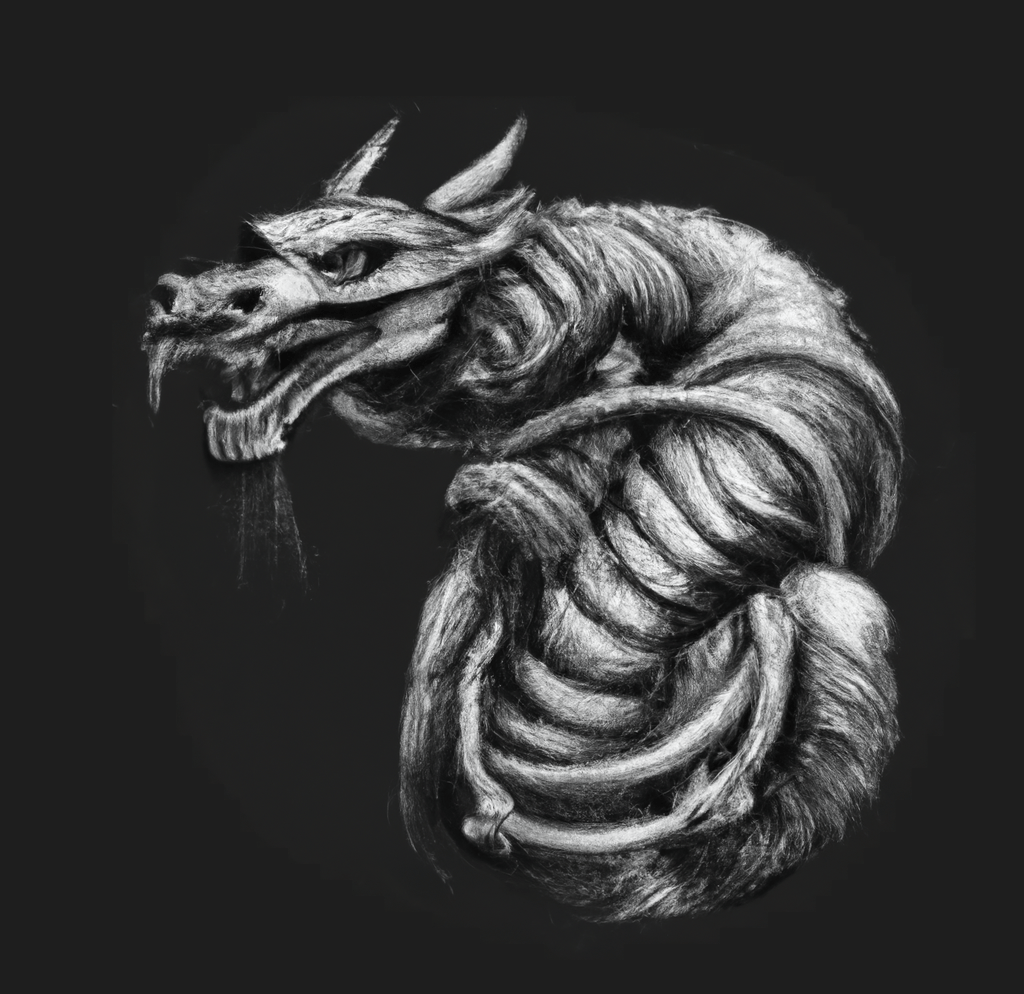
Lightning strikes the sky over Barovia, the country of Strahd Von Zarovich. Blue light flashes, revealing the thick, creeping woods. An illuminated river from a local lake curves through this patch of land. Five adventurers tasked with saving a lost child decide to cross this river. They don’t want to go around. Thankfully, a large old tree serves as a natural bridge for crossing.
So they crossed it. They regretted it.
The tree crumbled, and one failed dexterity check meant one player was in the water. They were swept away! And the worst news? The lightning flashes again, revealing the vampire overlord, Strahd, calling to slaughter the undead party member who managed to escape his grasp. –And he brought his wolves and bats too!
Oh, Gods! Chaos was afoot, and initiative was rolled.
One of my players had the brilliant idea to throw a rope to save the river-swept team member. But a question was raised when I, the DM, asked the player to roll a strength check to see how far they could throw it.

Should throwing a rope require a strength check or a dexterity check?
I could feel this question’s pausing effect on the game, like a Twix commercial that lasted more than the 30-second time slot allowed. I had opted to research the question later instead of just that moment. I enforced the strength check. After all, there were many more important things happening at that moment. River player drowning! Vampire attack! A question about a rope thrown just wasn’t that high of a priority.
But now it is.
So what is the specific correct answer right now? Here:
There is none! At least nothing related to throwing a rope directly in the description of any rulesets I own. The only descriptor for a standard piece of Adventuring Gear rope, whether silk or hempen made, is posted below:
“Rope. Rope, whether made of hemp or silk, has 2 hit points and can be burst with a DC 17 Strength check.”
Cost: 10 gp Silk, 1 gp Hemp
Weight: 5 lb Silk, 10 lb Hemp
SRD Pg. 68
When I sought to research this question, I thought the answer would be self-evident. However, I learned that the real question with the rope came to a head three years ago when Reddit user and DM u/GulesArgentAzure questioned whether the breaking point of rope is on par with reality.
In his post, The mad genius even calculated the physical properties of actual rope and effectively proved what a 17 DC strength check allegedly looks like in real life. Hey, good job breaking that 1-inch rope with ~8,500 lbs of force! Do not slap my back. It’s fragile.

Right, right. We’re not tearing rope apart. We’re throwing it. Hey, remember we’re having a Twix here.
So, seeing the rope description lacking what you could do RAW (Rules As Written), I decided to focus on the next set of rules that would clear this question.
If throwing is an action taken by the player, then what is an action?
“When you describe an action not detailed elsewhere in the rules, such as throwing, the GM tells you whether that action is possible and what kind of roll you need to take, if any, to determine success or failure.”
SRD, pg. 93 “Actions in Combat”
It’s certainly possible to throw a rope. So what kind of roll do we need to play? It circles back around to either Strength or Dexterity. So, let’s talk about those!
Strength:
- It is an Ability check.
- It is used for physical force or athleticism.
- It is used for weapons such as melee.
- It is used for weapons using a thrown property, even when they have finesse properties.
Dexterity:
- It is an Ability check.
- It is used for agility, reflexes, and balance.
- It is used for thrown weapons with finesse properties.
Here, the answer for what to use to throw the rope is clear. I was right to assume my player needed to use a Strength check to throw their rope and save their friend. The rope in 5e does not come with the finesse property attached to its description. And no, I’m not ignoring the whip, a martial weapon with the finesse property attached to it. In my opinion, a whip is not a rope until it’s turned into that weapon through crafting.
But there is something I never really cared to implement in my past games faithfully. What would be the DC (Dice Check) for the throw? Having thought about it, I discovered it depends on the type of rope they use!
In my opinion, the DC should vary between the type of rope used in the attempt:
- Hemp rope should have a DC 10 Strength check depending on game difficulty.
- Silk rope should have a DC 5 Strength check depending on game difficulty.
This course of action rewards players who invested their gold into the lighter silk rope, while a stiff but fair penalty exists for players considering cheap hempen rope, which is much heavier.
Regarding a Dexterity check, I’d reserve that action for catching the rope if it’s vital.
But before we get to overdoing things, let’s unpause the scene.
The way the players handled the situation was outstanding overall. The player was saved, another player fell in the water, and they were saved while Strahd’s wolves were impaling themselves on an unseen Spike Growth spell. Thanks, child Sorcerer player.
It was just a slaughter on the side of the monsters. The bats rolled a 1 to attack. Twice. They dove into the river like suicidal things, never to fly again. The wolves and dire wolves got their asses kicked by the river and the players. It was great. Strahd, disgusted with how the fight turned out, dispelled from the scene, leaving only mist in his wake. Now with an opportunity for some muted peace, the players still have to find the missing child.
What do you think? Have I missed something in my research of everything tying up your game pace involving tossing rope?
Either way, I hope this helps you throw a rope in a similar tabletop role-playing game… or that you enjoyed this strange piece. Thanks for reading.


One response to “How To Throw A Rope In D&D 5e”
[…] Suppose you are looking up the rules for throwing a rope, but there are none? (Too bad, I wrote an a… What now? Suddenly, you are going online to ask specific questions for specific things, where some of the ideas or rules online are suspect or even wrong. Or you have to make it up because your game is paused for too long. […]